School photoPhoto to be added
Canada
Mount Pearl Senior High School
Mount Pearl, Newfoundland and Labrador
Canada and Trinidad & Tobago
Launch: 29 October 2026Hackathon: 26 November 2026
Climate change knows no international boundaries; neither should its solutions. This hackathon links secondary school students in Canada and Trinidad and Tobago through their schools’ real electricity and weather data, AI tools and one shared climate challenge. It connects students and youth, communities, utilities, sponsors and governments, creates a cultural exchange, and turns transnational climate awareness into practical action in schools.
Led by the Carbon Zero Institute of Trinidad and Tobago, CZITT, in partnership with UNICEF Eastern Caribbean Area, and supported by the High Commission of Canada.
The hackathon opens with a public online launch chaired by Donald Baldeosingh, Founder and Chairman of CZITT, with greetings from UNICEF, the University of Trinidad and Tobago, and the governments of both countries.
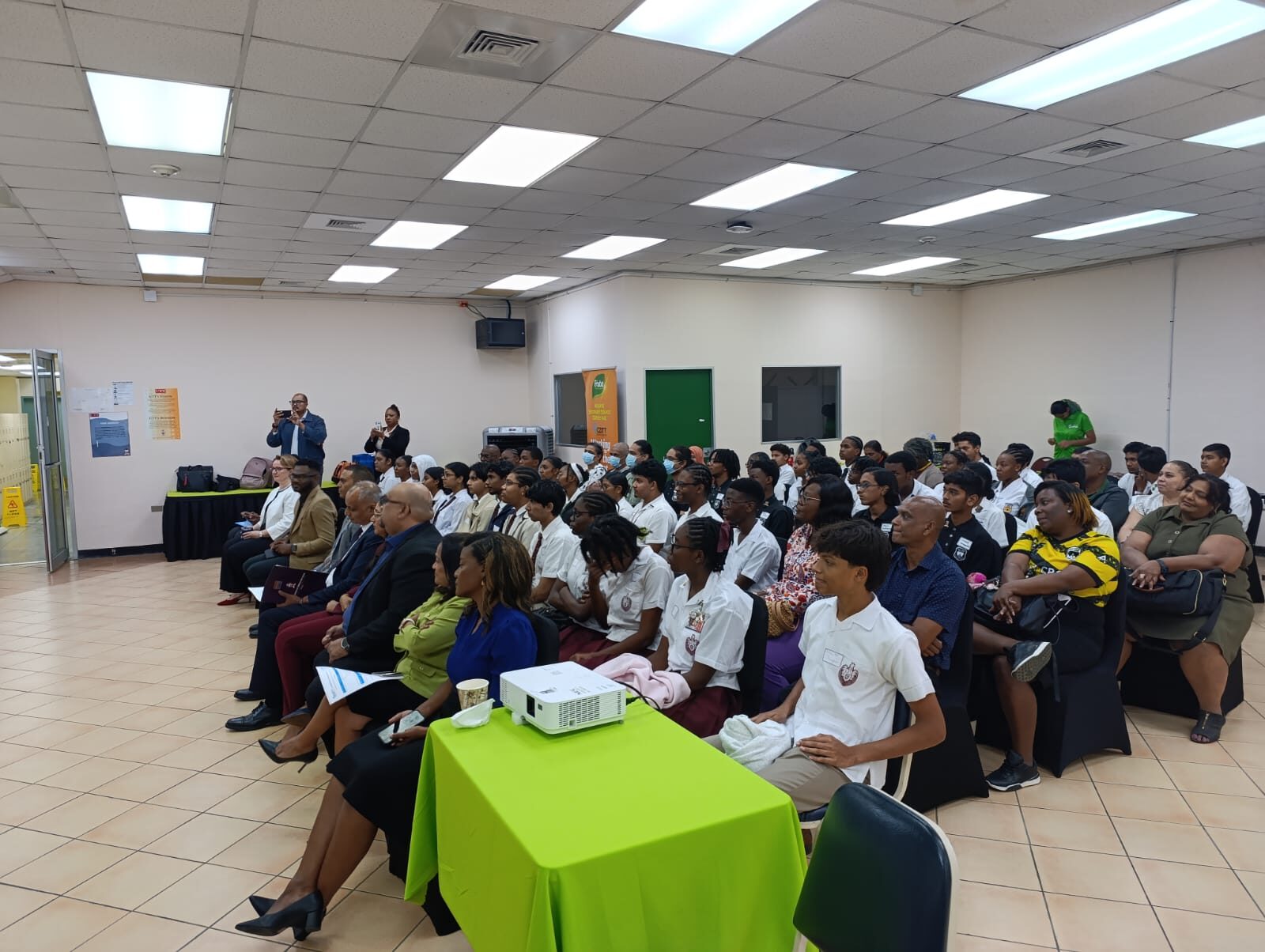
As in the first hackathon, the competition is the end of the programme and not the whole of it. Students are taught before they are asked to build anything.
The online launch with students, schools, sponsors and both governments.
Mentorship sessions on Tuesdays and Thursdays: AI tools, energy and climate concepts, data skills, teamwork and leadership.
Teams analyse their own school’s electricity consumption, utility billing and weather data, then build an AI supported model and a practical plan to cut carbon.
Every team presents its work to a judging panel and shares what it learned across Canada and Trinidad and Tobago.
Mount Pearl Senior High School and O’Donel High School, both in Mount Pearl, Newfoundland and Labrador, join thirteen schools across Trinidad and Tobago. This is the first time the hackathon runs across two countries, with the support of members of parliament in both.
The first hackathon, in June 2026, brought 48 students from eight Trinidad and Tobago schools through a 15 session training programme and into a live competition at UTT Point Lisas. The second builds on it with more schools, two of them Canadian, climate and weather data alongside electricity data, and more partners.
Mount Pearl, Newfoundland and Labrador
Mount Pearl, Newfoundland and Labrador
From Port of Spain and Arima to Couva, Chaguanas, San Fernando and Tobago
Several of the schools took part in the first hackathon in June 2026
The hackathon is intended to be the first practical implementation anywhere of an emerging open customer data specification from LF Energy, the energy project of the Linux Foundation, written by its Customer Data Working Group under the Connected Data Specifications programme.
The specification gives electricity consumption, utility billing and weather information one common shape, so it can move securely between systems and be read by AI tools without being reshaped by hand for every school. Trinidad and Tobago and Canada both take part on the same terms, and the hackathon will produce real evidence on how well the specification works in practice. The specification was approved for future use by the Green Button Alliance in October 2026.
Students see the point of this directly: a standard is what lets a team in Mount Pearl and a team in San Fernando compare their schools without arguing about file formats first.
Secondary school students get hands on experience with responsible AI, data analysis, teamwork, leadership and communication.
Students learn to read electricity use and a utility bill, and to see how weather patterns, energy management and climate impacts connect.
The Caribbean UEnergyHub and the AI Foundry provide the data and collaboration environment, a sovereignty first model that keeps control local.
Direct links between schools, educators, technology specialists and institutions in Newfoundland and Labrador and in Trinidad and Tobago, and a genuine cultural exchange.
The Hackathon is an excellent example of what can be achieved when institutions work together to empower our youth and address national priorities.
Professor Rean MaharajActing President, The University of Trinidad and Tobago


Proudly sponsored by






UNICEF Eastern Caribbean Area. High Commission of Canada. Trinidad and Tobago Electricity Commission. The University of Trinidad and Tobago. Screaming Power. Smart Grid Innovation Network. Southern Caribbean Cable Company. Paria Fuel Trading Company Limited. BMSna.